


Types of Cricket Shots: Names, How to Play Them and Famous Players
Cricket has around two dozen common batting shots, and each one answers a particular kind of delivery. Full balls are driven on the front foot: the straight, on, off and cover drives. Short balls are cut, pulled or hooked off the back foot. Balls on the pads are flicked or glanced, spinners are swept, and modern white-ball batters add the scoop, the switch hit and the helicopter shot. This guide covers 24 shots, with the delivery each one suits, how to play it, and the players best known for it.

Every shot starts with the same decision, made in the half-second after the ball leaves the bowler's hand. The batter reads the length first. A full ball draws the batter forward to drive or defend; a short ball sends them back to cut, pull, punch or defend. The line comes next: a ball outside off stump is played through the off side, and a ball on the pads goes to the leg side.
The type of bowling narrows the choice further. Against pace, the cut, pull and hook come into play because the ball arrives quickly and bounces higher. Against spin, the ball is slower and fuller, so batters step out to drive or go down on one knee to sweep. In T20 cricket, the improvised shots exist because bowlers aim yorkers and wide slower balls at the death.
All the descriptions below are for a right-handed batter. A left-hander plays the mirror image, so the off side and leg side swap: a left-hander's cover drive goes to the side of the field where a right-hander would flick.
All cricket shots at a glance
Use this table to find a shot quickly. Each shot has its own section below with how to play it, the right delivery, and a common mistake to avoid.
| Shot | Foot | Delivery | Bowling | Famous for it |
|---|---|---|---|---|
| 1. Forward defence | Front | Full or good length; on or just outside off stump, threatening the stumps | Pace and spin | Rahul Dravid, Cheteshwar Pujara, Sunil Gavaskar |
| 2. Backward defence | Back | Short of a length, rising; at the body or around off stump | Mainly pace | Rahul Dravid, Cheteshwar Pujara |
| 3. The leave | Either | Good length and back of a length; outside off stump, missing the stumps | Mainly pace, especially swing and seam | Sunil Gavaskar, Cheteshwar Pujara, Alastair Cook |
| 4. Straight drive | Front | Full, just short of a yorker; on the stumps, middle or off | Pace and spin | Sachin Tendulkar, Virat Kohli |
| 5. On drive | Front | Full; middle and leg stump | Pace and spin | Sachin Tendulkar, Virat Kohli |
| 6. Cover drive | Front | Full; outside off stump, close enough to reach | Pace and spin | Virat Kohli, Shubman Gill, Smriti Mandhana, Babar Azam |
| 7. Off drive | Front | Full; on or just outside off stump | Pace and spin | Sourav Ganguly, Sachin Tendulkar |
| 8. Square drive | Front or back | Full to a touch short of full; wide outside off stump | Mainly pace | Virender Sehwag |
| 9. Lofted drive and stepping out | Front, or down the pitch | Full, or made full by stepping out; on the stumps or just outside | Spin when stepping out; pace for the inside-out loft | Sourav Ganguly, MS Dhoni, Rohit Sharma |
| 10. Back-foot punch | Back | Short of a good length; on or outside off stump | Pace | Virat Kohli, Sachin Tendulkar |
| 11. Square cut | Back | Short; wide outside off stump | Pace and short spin | Gundappa Viswanath, Virender Sehwag |
| 12. Late cut | Back | Short of a length to short; outside off stump | Pace, and spin with width | Joe Root, Kane Williamson |
| 13. Upper cut | Back | Short, bouncing above chest height; wide outside off stump | Fast pace | Sachin Tendulkar, Virender Sehwag |
| 14. Pull shot | Back | Short, arriving at waist to chest height; on the stumps or at the body | Pace | Rohit Sharma, Ricky Ponting |
| 15. Hook shot | Back | Bouncer, shoulder or head height; at the body or the head | Fast pace | Viv Richards, Rohit Sharma |
| 16. Flick (clip off the pads) | Front | Full to good length; on the pads or middle stump | Pace and spin | Mohammad Azharuddin, VVS Laxman, Virat Kohli |
| 17. Leg glance | Front or back | Good length to short of a length; on the pads, drifting down leg | Pace | K. S. Ranjitsinhji, most Test openers |
| 18. Sweep shot | Front, knee down | Full or good length; middle, leg, or just outside off stump | Spin | Matthew Hayden, Joe Root |
| 19. Slog sweep | Front, knee down | Full, tossed up; middle and leg | Spin | Glenn Maxwell |
| 20. Paddle sweep | Front, knee down | Full or good length; on the stumps or the pads | Mostly spin, sometimes medium pace | Sachin Tendulkar |
| 21. Reverse sweep | Front, knee down | Full or good length; on the stumps or outside off | Spin | Glenn Maxwell, Jos Buttler, Joe Root |
| 22. Switch hit | Change of stance | Full; around the stumps | Spin, sometimes pace | Kevin Pietersen, Glenn Maxwell |
| 23. Scoop and ramp shot | Crouched | Full, close to a yorker; on the stumps | Pace | Tillakaratne Dilshan, AB de Villiers, Suryakumar Yadav, Rishabh Pant |
| 24. Helicopter shot | Firm base | Yorker or low full toss; at the base of the stumps or the toes | Pace, at the death | MS Dhoni |
Reading the delivery: length and line
Length is where the ball pitches between the bowler and the batter. It decides whether the batter goes forward or back, and it is the first thing coaches teach young players to read.
| Length | Where it pitches | Usual shots |
|---|---|---|
| Yorker | At the batter's toes or the base of the stumps | Block it out; in T20s, the helicopter shot or a scoop |
| Full | A stride in front of the batter | Straight, on, off and cover drives; flick; lofted drive; sweeps against spin |
| Good length | Short of full, where the batter is unsure whether to go forward or back | Forward defence, leave, flick, or a sweep against spin |
| Short of a length | Halfway down, rising to the hip or ribs | Backward defence, back-foot punch, late cut |
| Short | Well short, arriving at chest height | Pull, square cut, upper cut |
| Bouncer | Very short, arriving at shoulder or head height | Hook, upper cut, or duck |
Line is where the ball travels in relation to the stumps. A ball on the off stump or just outside, the "corridor of uncertainty", is the hardest to judge, because the batter is unsure whether to play or leave. A ball on the pads is a scoring chance for the flick and glance, and a ball wide outside off stump invites the cut and the square drive.
Batting basics: grip, stance and backlift
Every shot in this guide is easier with a sound grip and stance. These are worth checking before working on any individual shot.
How to hold a cricket bat
Put the bat face down on the ground and pick it up with both hands close together near the top of the handle. For a right-hander, the left hand is on top and the right hand just below it. The V shapes formed between thumb and forefinger on both hands should line up, pointing roughly between the outside edge and the splice of the bat. The top hand controls the bat; the bottom hand adds power, so hold it more loosely.
Batting stance
Stand side-on with the feet shoulder-width apart, either side of the batting crease, knees slightly bent and weight on the balls of the feet. Keep the head still and the eyes level, looking at the bowler over the front shoulder. A relaxed, balanced stance lets the batter move forward or back quickly once the length is clear.
Backlift
As the bowler runs in, lift the bat back toward the stumps or second slip, with the face slightly open. A straight backlift makes the straight-bat shots, the drives and the defence, much easier, and a higher backlift helps against fuller balls. Players such as Brian Lara were known for a very high backlift, but most coaches teach a moderate one first.
1. Forward defence
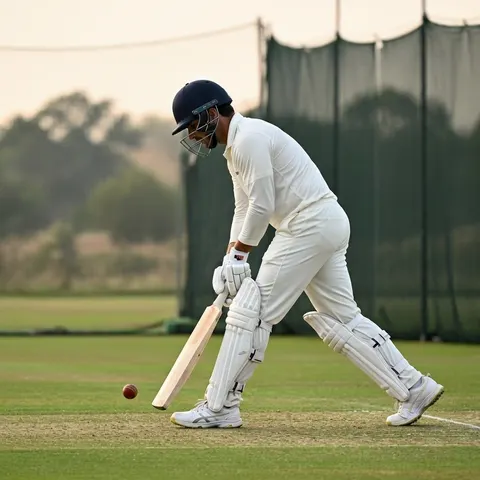
The forward defence is the first shot every coach teaches and the one Test batters play most often. The batter steps forward to a full or good-length ball, smothers it with the bat next to the front pad, and lets it drop dead on the pitch. It scores nothing, but it keeps the batter in long enough to score off the bad balls.
Rahul Dravid built a career on it, which is part of why he was called The Wall. Cheteshwar Pujara and Sunil Gavaskar are the other classic Indian examples: batters who could defend for hours against the new ball and then cash in once the bowlers tired.
| Length | Full or good length |
| Line | On or just outside off stump, threatening the stumps |
| Bowling | Pace and spin |
| Footwork | Front foot, long stride to the pitch of the ball |
| Where it goes | Drops in front of the batter; nowhere |
| Famous for it | Rahul Dravid, Cheteshwar Pujara, Sunil Gavaskar |
| Risk | Low |
How to play the forward defence
- Lead with your head and front shoulder toward the line of the ball.
- Step forward so your front foot lands close to where the ball pitches.
- Bring the bat down straight and close to the front pad, with the face angled slightly down.
- Hold the bat with soft hands, mostly with the top hand, so the ball dies on contact.
- Keep your head over the ball and hold the position until the ball has stopped.
Common mistake: Pushing hard at the ball with the bottom hand. The ball then carries off the bat to short leg, silly point or the slips, which are exactly where close fielders wait.
2. Backward defence
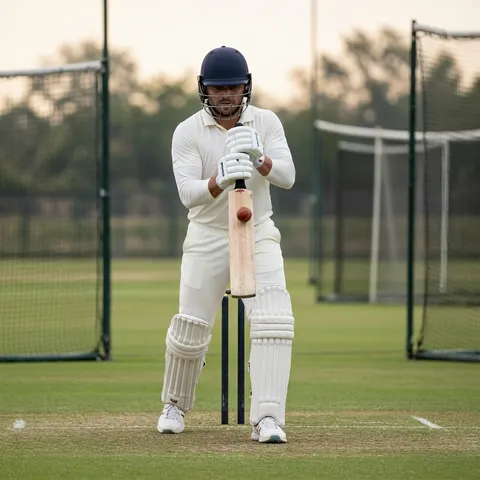
The backward defence is the back-foot partner of the forward defence. When a ball is short of a length and rising toward the ribs or chest, the batter moves back and across, stands tall, and plays it down under the eyes with a vertical bat.
It matters most on bouncy pitches and against quick bowlers. Dravid and Pujara were masters of it in Australia and South Africa, where the ball climbs higher than on most Indian pitches.
| Length | Short of a length, rising |
| Line | At the body or around off stump |
| Bowling | Mainly pace |
| Footwork | Back foot, back and across toward off stump |
| Where it goes | Drops at the batter's feet |
| Famous for it | Rahul Dravid, Cheteshwar Pujara |
| Risk | Low |
How to play the backward defence
- Move your back foot back and across, staying inside the line of the ball.
- Stand tall, with your weight on the back foot and your head still.
- Lift the bat with a high front elbow and keep it vertical.
- Meet the ball under your eyes with soft hands and the bat face angled down.
- Bring the front foot back alongside for balance after contact.
Common mistake: Falling backward or away toward square leg. The bat then comes across the line and the ball takes the edge to the slips or gully.
3. The leave
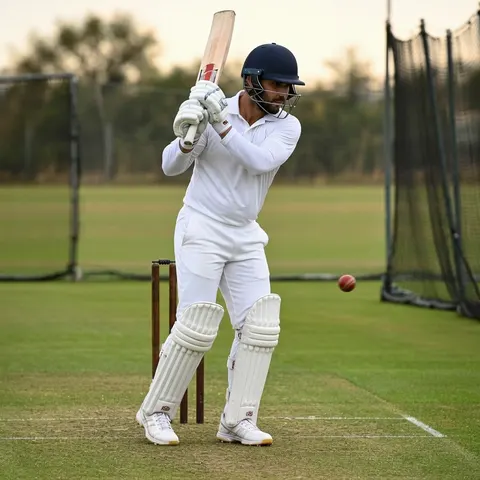
Leaving the ball is a shot in its own right. A batter who judges which balls will miss off stump, and lets them pass with the bat lifted out of the way, takes away the bowler's best chance of an edge. Good leaving is what turns a pace bowler's fourth-stump line into wasted overs.
Sunil Gavaskar opened against the great West Indies fast bowlers without a helmet and left the ball superbly. Among modern Indian batters, Cheteshwar Pujara's leaving in long Test innings in Australia is the standard example.
| Length | Good length and back of a length |
| Line | Outside off stump, missing the stumps |
| Bowling | Mainly pace, especially swing and seam |
| Footwork | A small forward or back press, body behind the line |
| Where it goes | Through to the wicketkeeper |
| Famous for it | Sunil Gavaskar, Cheteshwar Pujara, Alastair Cook |
| Risk | Low, unless you misjudge a ball that comes back in |
How to leave the ball
- Know where your off stump is: take guard and notice your stance in relation to it.
- Watch the ball from the bowler's hand and judge the line early.
- Move into line with a small step, as if to play.
- Lift the bat high and away from the body, with hands above the shoulder.
- Keep watching the ball into the keeper's gloves so you learn the line.
Common mistake: Leaving a ball that swings or seams back in. Shouldering arms to a straight ball is one of the most common ways to be bowled or out LBW.
4. Straight drive
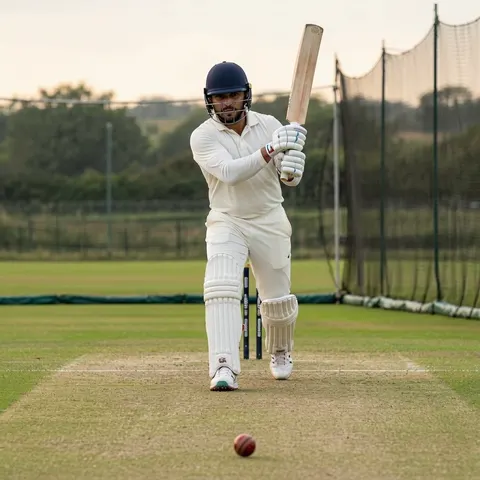
The straight drive sends a full ball back past the bowler, between mid-off and mid-on, along the ground. It is played with the full face of the bat and a straight swing, which makes it one of the safest attacking shots in cricket and one of the best to watch.
Sachin Tendulkar's straight drive, with its short, checked follow-through, is the image most Indian fans picture. Virat Kohli plays it just as straight. Both often did not need to swing hard: the ball raced away off the middle of the bat.
| Length | Full, just short of a yorker |
| Line | On the stumps, middle or off |
| Bowling | Pace and spin |
| Footwork | Front foot, stride toward the ball |
| Where it goes | Between mid-off and mid-on, past the bowler |
| Famous for it | Sachin Tendulkar, Virat Kohli |
| Risk | Low |
How to play the straight drive
- Lead with the head and front shoulder pointing back down the pitch.
- Step forward to the pitch of the ball, front knee bent.
- Swing the bat straight down the line with a high front elbow.
- Meet the ball under your eyes with the full face of the bat.
- Finish with a short, high follow-through toward the bowler.
Common mistake: Opening the front shoulder too early. The bat then comes across the line and the ball goes to mid-on in the air or to the bowler for a return catch.
5. On drive
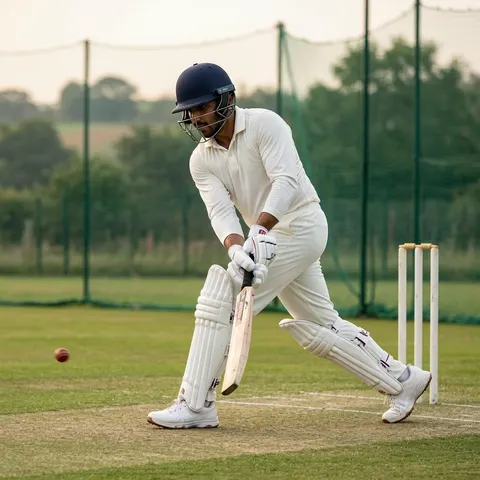
The on drive sends a full ball on the leg stump or middle stump between mid-on and mid-wicket. Many coaches call it the hardest drive to master: the front foot sits in the path of the swing, so the batter has to lead with the head and let the front hip open just enough for the bat to come through straight.
Sachin Tendulkar's on drive is the textbook reference. Virat Kohli plays it with the same straight bat, often early in an innings when bowlers drift onto his pads.
| Length | Full |
| Line | Middle and leg stump |
| Bowling | Pace and spin |
| Footwork | Front foot, pointing toward mid-on |
| Where it goes | Between mid-on and mid-wicket |
| Famous for it | Sachin Tendulkar, Virat Kohli |
| Risk | Low to medium |
How to play the on drive
- Let your head fall toward the line of the ball first.
- Step forward with the front foot pointing a little toward mid-on.
- Open the front hip slightly so the bat has room to swing.
- Swing straight, with a high front elbow, and hit the ball under your eyes.
- Follow through toward mid-on, keeping the bat face pointing where you aimed.
Common mistake: Closing the bat face early and turning it into a flick. The ball then goes in the air toward mid-wicket instead of along the ground.
6. Cover drive
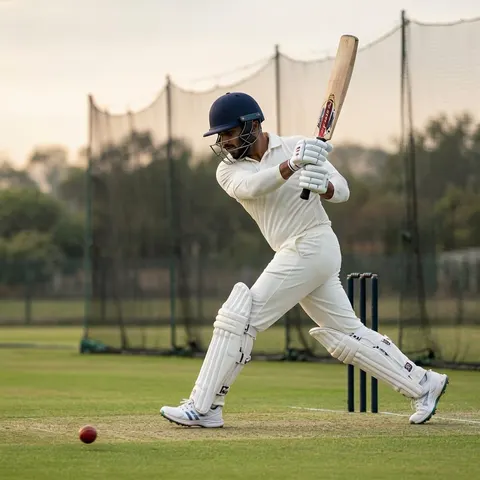
The cover drive is the shot most fans would pick as cricket's most beautiful. A full ball outside off stump is met on the front foot and stroked through the covers, between extra cover and point. When it is timed well, the batter barely seems to swing.
Virat Kohli's cover drive is the one Indian fans copy in the gully, and Shubman Gill and Smriti Mandhana play it with a similar high finish. Pakistan's Babar Azam is the other batter of this era most associated with it. It is also the shot bowlers try to bait: a cover drive played away from the body is the classic way to edge to the slips.
| Length | Full |
| Line | Outside off stump, close enough to reach |
| Bowling | Pace and spin |
| Footwork | Front foot, stride toward the line of the ball |
| Where it goes | Through extra cover and cover |
| Famous for it | Virat Kohli, Shubman Gill, Smriti Mandhana, Babar Azam |
| Risk | Medium: the edge to the slips |
How to play the cover drive
- Lead with the head and front shoulder toward the ball outside off stump.
- Stride forward so the front foot lands close to the line of the ball.
- Bend the front knee and keep your head over the ball.
- Swing a straight bat with a high front elbow, hitting the ball next to the front pad.
- Finish high, with the bat pointing toward the covers.
Common mistake: Driving at a ball that is not full enough, or reaching for it without moving the feet. The gap between bat and pad grows and the ball takes the outside edge.
7. Off drive
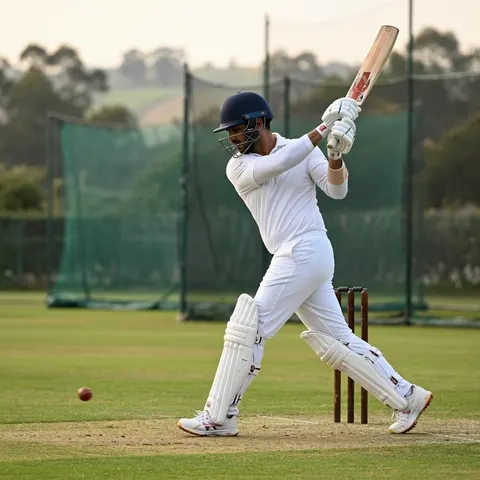
The off drive is hit between mid-off and extra cover, off a full ball on or just outside off stump. It sits between the straight drive and the cover drive, and the batter only changes the angle of the front shoulder to choose between them.
Sourav Ganguly's off-side driving earned him the nickname God of the Off Side. Left-handers like Ganguly drive through this region with the ball angling across them, which makes the shot look especially natural.
| Length | Full |
| Line | On or just outside off stump |
| Bowling | Pace and spin |
| Footwork | Front foot |
| Where it goes | Between mid-off and extra cover |
| Famous for it | Sourav Ganguly, Sachin Tendulkar |
| Risk | Low to medium |
How to play the off drive
- Lead with the front shoulder pointing at mid-off.
- Stride forward to the pitch of the ball.
- Swing straight down the line with a high front elbow.
- Meet the ball beside the front pad, with the full face of the bat.
- Let the follow-through finish over the front shoulder.
Common mistake: Hitting too hard with the bottom hand. The face closes and the ball goes straight to mid-off, or flies in the air.
8. Square drive
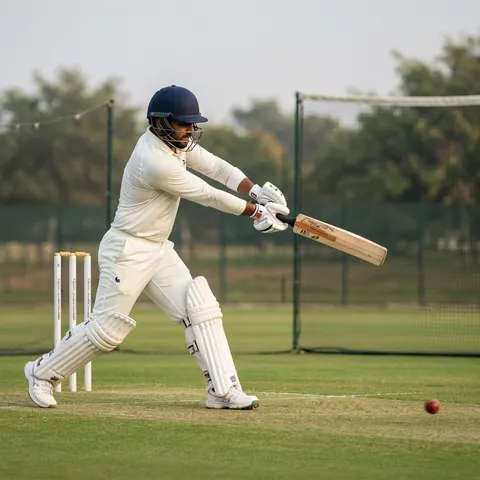
The square drive goes square of the wicket on the off side, through point and backward point. It is played to a full or slightly overpitched ball well outside off stump, either with a stride forward or with weight on the back foot if the ball is a little shorter.
Virender Sehwag hit square drives and cuts with almost no foot movement, relying on hand speed and an eye for width. The shot rewards bowlers who stray wide; batters who chase it on a straighter line tend to edge it.
| Length | Full to a touch short of full |
| Line | Wide outside off stump |
| Bowling | Mainly pace |
| Footwork | Front foot across, or back foot if shorter |
| Where it goes | Point and backward point |
| Famous for it | Virender Sehwag |
| Risk | Medium |
How to play the square drive
- Judge the width early: the ball must be well outside off stump.
- Move the front foot toward the line of the ball.
- Swing the bat down and through, square of the wicket.
- Keep the ball down by staying over it and rolling the wrists.
- Finish with the bat pointing toward point.
Common mistake: Playing it to a ball that is too close to the body. There is no room to swing and the ball takes the edge.
9. Lofted drive and stepping out
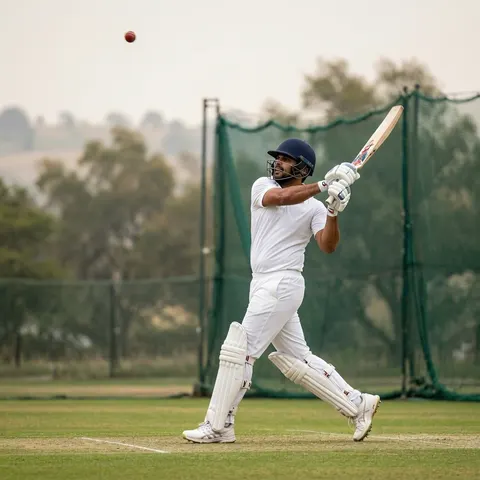
A lofted drive is a drive hit in the air, usually over mid-off, long-off or long-on, and it is the cleanest way to hit a six. Against spin, batters often step out of the crease, skipping down the pitch to turn a good-length ball into a full one they can hit straight.
Sourav Ganguly was famous for dancing down the pitch to spinners and hitting them over long-on. MS Dhoni finished the 2011 World Cup final at the Wankhede with a lofted drive for six over long-on. Rohit Sharma's inside-out loft over extra cover is the modern version against pace.
| Length | Full, or made full by stepping out |
| Line | On the stumps or just outside |
| Bowling | Spin when stepping out; pace for the inside-out loft |
| Footwork | Front foot, or two or three quick steps down the pitch |
| Where it goes | Over mid-off, long-off, long-on or extra cover |
| Famous for it | Sourav Ganguly, MS Dhoni, Rohit Sharma |
| Risk | High: caught in the deep or stumped |
How to play the lofted drive
- Pick the length early: a tossed-up ball from a spinner is the invitation.
- If stepping out, move quickly and stay side-on, keeping the head still.
- Get to the pitch of the ball so you hit it on the full.
- Swing through the line with a full follow-through, hitting under the ball.
- Hold your shape at the finish; balance matters more than force.
Common mistake: Committing to step out too early. A good spinner sees it, drops the ball shorter or wider, and you are stumped.
10. Back-foot punch
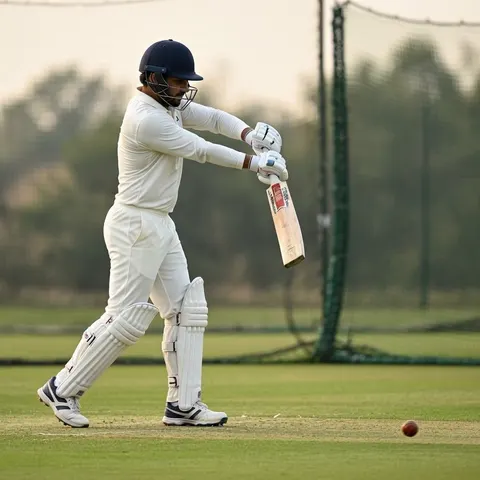
The back-foot punch, or back-foot drive, is played to a ball just short of a length outside off stump. Instead of reaching forward, the batter goes back, stands tall and punches the ball through the covers or past the bowler with a vertical bat and a short follow-through.
Virat Kohli and Sachin Tendulkar both scored heavily with it on bouncy overseas pitches. It is the shot that tells you a batter is comfortable against pace: it needs height, balance and late timing.
| Length | Short of a good length |
| Line | On or outside off stump |
| Bowling | Pace |
| Footwork | Back foot, back and across |
| Where it goes | Through cover or straight past the bowler |
| Famous for it | Virat Kohli, Sachin Tendulkar |
| Risk | Medium |
How to play the back-foot punch
- Move back and across, rising onto the toes of the back foot.
- Stand tall with a high front elbow.
- Play the ball late, under your eyes, with a vertical bat.
- Punch through it with a short, firm follow-through.
- Keep the head still so the ball stays on the ground.
Common mistake: Playing it to a ball that is too full. You are caught on the back foot and play across a ball that should have been driven or defended forward.
11. Square cut
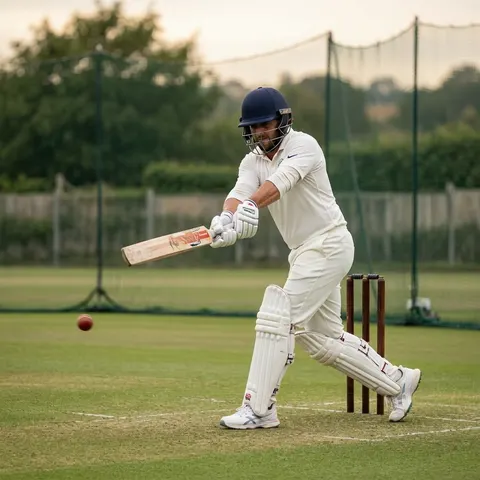
The square cut punishes a short, wide ball outside off stump. The batter goes back and across, lets the ball come, and slices down on it with a horizontal bat so it flies square through point. It is one of the most satisfying shots in cricket and one of the quickest ways to four runs.
Gundappa Viswanath was celebrated for his square cut in the 1970s. Virender Sehwag cut anything short and wide with the same fearlessness, often in the first over of a Test match.
| Length | Short |
| Line | Wide outside off stump |
| Bowling | Pace and short spin |
| Footwork | Back foot, back and across toward off stump |
| Where it goes | Point and backward point |
| Famous for it | Gundappa Viswanath, Virender Sehwag |
| Risk | Medium: the edge to gully or the slips |
How to play the square cut
- Move the back foot back and across toward the line of the ball.
- Turn the shoulders so the bat can come down from high.
- Extend the arms and hit down on the ball with a horizontal bat.
- Roll the wrists over at contact to keep the ball down.
- Finish with the bat pointing toward point.
Common mistake: Cutting a ball that is too close to the body or not short enough. Without width the bat has no room and the ball flies off the edge.
12. Late cut
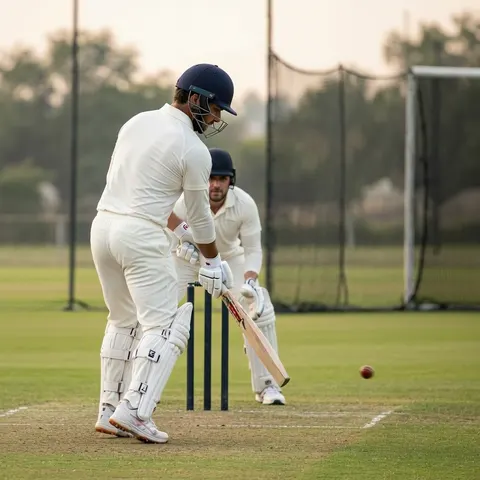
The late cut is a delicate shot. The batter waits until the ball has almost passed, then dabs down on it with an open bat face and steers it past the slips toward third man. It uses the bowler's pace, not the batter's power, and it is a quiet way to keep the scoreboard ticking.
England's Joe Root and New Zealand's Kane Williamson are the best-known modern exponents. Both use the dab to third man so often that captains have to keep a fielder there.
| Length | Short of a length to short |
| Line | Outside off stump |
| Bowling | Pace, and spin with width |
| Footwork | Back foot |
| Where it goes | Past the slips toward third man |
| Famous for it | Joe Root, Kane Williamson |
| Risk | Medium |
How to play the late cut
- Go back and let the ball pass the front of your body.
- Keep your hands soft and the bat face open.
- Dab down on the ball very late, just before it reaches the keeper.
- Guide it, do not swing: the pace of the ball does the work.
- Watch it off the bat to judge the run.
Common mistake: Playing it too early. The ball is still in front of the slips when it meets the bat, and it goes straight to them.
13. Upper cut
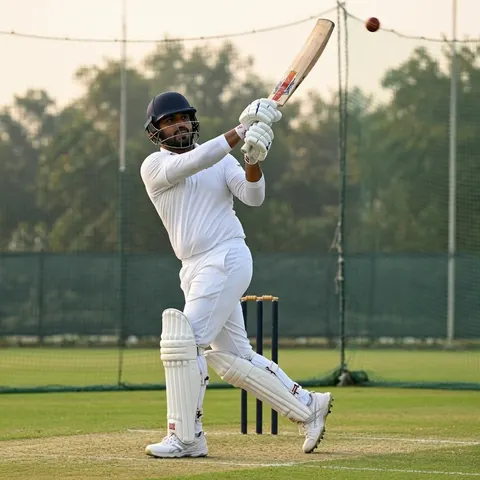
The upper cut is a modern shot against short, rising balls wide of off stump. Instead of cutting down, the batter slices up at the ball and lifts it over the slips and gully toward third man, using the bowler's pace for height.
The most famous upper cut in Indian cricket is Sachin Tendulkar's six over third man off Shoaib Akhtar at Centurion in the 2003 World Cup. Virender Sehwag used it regularly to fast bowlers who tried to bounce him out.
| Length | Short, bouncing above chest height |
| Line | Wide outside off stump |
| Bowling | Fast pace |
| Footwork | Back foot, weight staying back |
| Where it goes | Over the slips and gully toward third man |
| Famous for it | Sachin Tendulkar, Virender Sehwag |
| Risk | High: caught at third man or by a slip |
How to play the upper cut
- Only play it if the ball is short and wide enough to free the arms.
- Stay back and get the head inside the line of the ball.
- Extend the arms upward and slice through the ball with an open face.
- Use the bowler's pace; a firm slice is enough.
- Watch the fielder at third man before trying it a second time.
Common mistake: Trying it to a ball that is not wide. The bat comes across the body and the ball goes straight up or to the keeper.
14. Pull shot
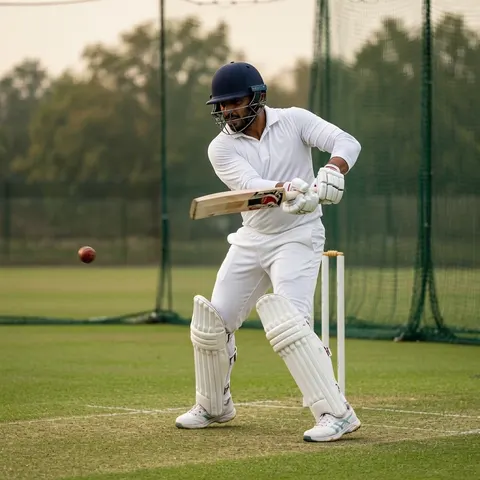
The pull shot attacks a short ball that arrives around waist or chest height on the line of the stumps. The batter swivels on the back foot and swings a horizontal bat to send it through mid-wicket or square leg. It is the main scoring shot against short-pitched bowling.
Rohit Sharma's pull is one of the defining shots of modern Indian batting, and much of his six-hitting comes from it. Ricky Ponting was famous for picking the length so early that he pulled off the front foot.
| Length | Short, arriving at waist to chest height |
| Line | On the stumps or at the body |
| Bowling | Pace |
| Footwork | Back foot, pivoting toward the leg side |
| Where it goes | Mid-wicket and square leg |
| Famous for it | Rohit Sharma, Ricky Ponting |
| Risk | Medium: top edge to fine leg |
How to play the pull shot
- Pick the short length early, from the bowler's hand.
- Move the back foot back and across, getting inside the line.
- Pivot on the back foot and turn the hips toward the leg side.
- Swing a horizontal bat with the arms extended, hitting the ball in front of the body.
- Roll the wrists over at contact to keep the ball down.
Common mistake: Pulling a ball that is not short enough, or pulling with the head falling away. The ball skids under the bat or takes a top edge.
15. Hook shot
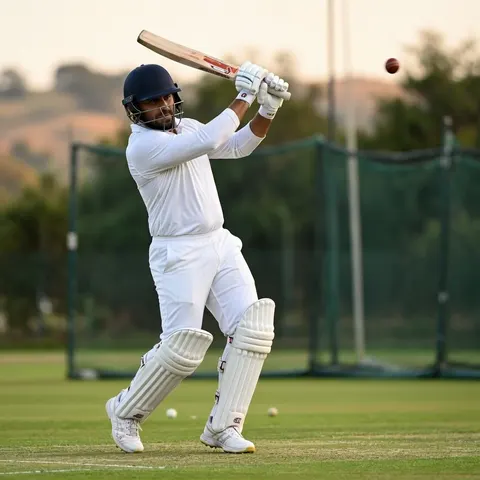
The hook is the pull shot's riskier relative. It is played to a bouncer at shoulder or head height, and the ball usually goes behind square leg, often in the air. It is the shot that decides who wins a duel with a fast bowler.
Viv Richards hooked the fastest bowlers of his era without a helmet. Rohit Sharma hooks freely today, and it is a major source of his sixes on bouncy pitches.
| Length | Bouncer, shoulder or head height |
| Line | At the body or the head |
| Bowling | Fast pace |
| Footwork | Back foot, rising and swivelling |
| Where it goes | Behind square leg and fine leg |
| Famous for it | Viv Richards, Rohit Sharma |
| Risk | High: caught in the deep, or hit on the helmet |
How to play the hook shot
- Decide early: hook it or duck it. Half-shots are dangerous.
- Get the head inside the line of the ball, toward the off side.
- Rise onto the back foot and swivel toward the leg side.
- Swing the bat across at shoulder height, eyes on the ball.
- Accept that it may go in the air; aim for a gap or the boundary.
Common mistake: Taking the eyes off the ball or being in line with it. Always wear a helmet when facing short-pitched bowling, and learn to duck before you learn to hook.
16. Flick (clip off the pads)
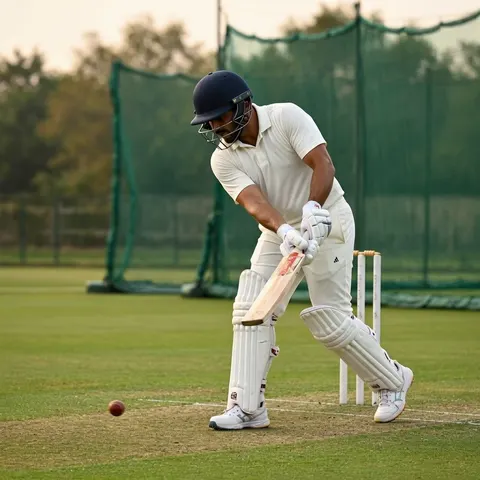
The flick, also called the clip off the pads, turns a full ball on the leg stump or middle stump through mid-wicket or square leg. The batter plays with a straight bat and closes the face with the wrists at the last moment.
Indian batters are famous for it. Mohammad Azharuddin and VVS Laxman flicked balls from outside off stump through mid-wicket with their wrists, and Virat Kohli's whip through mid-wicket is one of his main scoring shots.
| Length | Full to good length |
| Line | On the pads or middle stump |
| Bowling | Pace and spin |
| Footwork | Front foot, or back foot for a shorter ball |
| Where it goes | Mid-wicket and square leg |
| Famous for it | Mohammad Azharuddin, VVS Laxman, Virat Kohli |
| Risk | Low to medium: LBW if the bat closes too early |
How to play the flick
- Step toward the line of the ball with the front foot.
- Start with a straight bat, as if playing straight.
- Close the face with a turn of the wrists just before contact.
- Hit the ball under the eyes, in front of the front pad.
- Let the wrists finish the shot toward mid-wicket.
Common mistake: Closing the face too early on a ball that is not on the pads. The bat comes across and the ball hits the pad for an LBW appeal or goes up off the leading edge.
17. Leg glance
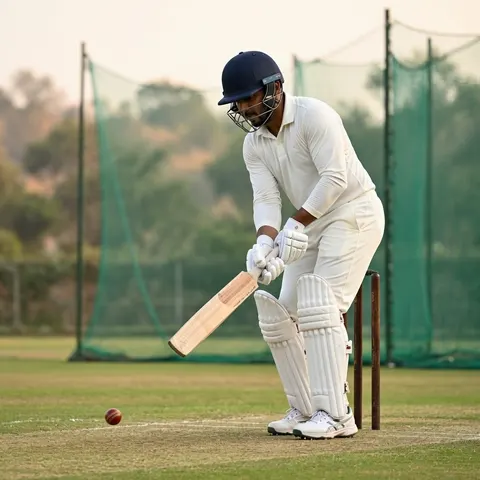
The leg glance is the gentlest shot in cricket. A ball on the pads or drifting down the leg side is deflected fine with an angled bat face, using the bowler's pace, toward fine leg. Batters use it to take singles and boundaries off bowlers who stray onto the pads.
K. S. Ranjitsinhji is credited with popularising the leg glance in the late 1800s, and it is part of every opening batter's game today.
| Length | Good length to short of a length |
| Line | On the pads, drifting down leg |
| Bowling | Pace |
| Footwork | Front or back foot, a small step across |
| Where it goes | Fine leg |
| Famous for it | K. S. Ranjitsinhji, most Test openers |
| Risk | Low: a thin edge to the keeper |
How to play the leg glance
- Get the body in line with the ball on the pads.
- Present the bat straight, in front of the pads.
- Turn the face toward the leg side at contact with the wrists.
- Let the ball's pace carry it fine; do not swing.
- Keep the bat in front of the pad so a missed glance is not LBW.
Common mistake: Reaching for a ball that is going well down the leg side. The ball brushes the glove and the keeper takes the catch.
18. Sweep shot
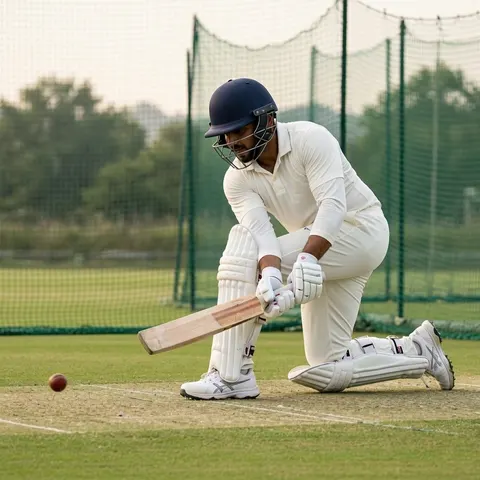
The sweep is the standard attacking answer to spin. The batter goes down on the back knee, gets the front leg toward the line of the ball and sweeps it with a horizontal bat through square leg or fine leg. It upsets a spinner's length, because good-length balls suddenly become scoring balls.
Australia's Matthew Hayden swept India's spinners relentlessly on the 2001 tour. Joe Root sweeps and reverse-sweeps as a core part of his game in Asia.
| Length | Full or good length |
| Line | Middle, leg, or just outside off stump |
| Bowling | Spin |
| Footwork | Front foot, back knee down |
| Where it goes | Square leg and fine leg |
| Famous for it | Matthew Hayden, Joe Root |
| Risk | Medium: top edge or LBW |
How to play the sweep shot
- Commit early, once you see a full ball from the spinner.
- Stride the front leg toward the line and drop the back knee.
- Get the head over the ball, close to the front knee.
- Swing a horizontal bat across the front pad, hitting down on the ball.
- Roll the wrists to keep it along the ground.
Common mistake: Sweeping a ball that is too short or bouncing. It takes the top edge and goes up in the air, or hits the pad in front for LBW.
19. Slog sweep
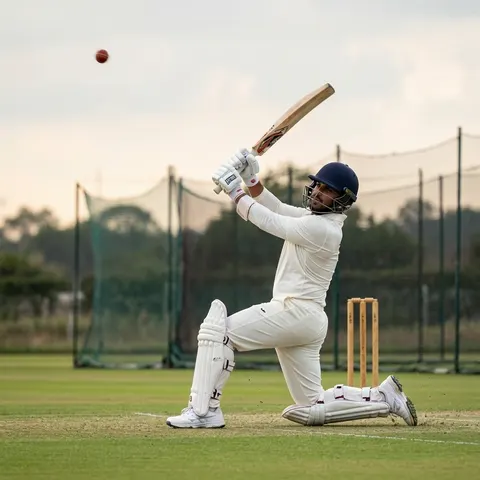
The slog sweep is the six-hitting version of the sweep. From the same kneeling position, the batter swings in a full arc and hits a tossed-up ball over deep mid-wicket or cow corner. It is one of the most common ways to hit a spinner for six in white-ball cricket.
Glenn Maxwell is one of the most dangerous slog-sweepers in modern cricket, and most T20 middle-order hitters use it against spin.
| Length | Full, tossed up |
| Line | Middle and leg |
| Bowling | Spin |
| Footwork | Front foot, back knee down |
| Where it goes | Over deep mid-wicket and cow corner |
| Famous for it | Glenn Maxwell |
| Risk | High: caught on the boundary |
How to play the slog sweep
- Wait for the flighted ball; the slog sweep needs a full length.
- Get down early, front leg toward the line.
- Swing in a full arc, from high to high, under the ball.
- Keep the head still and watch the ball onto the bat.
- Clear the front leg if needed to give the arms room.
Common mistake: Slogging against the turn on a ball that is too short. It takes the top edge and the ball lands with the fielder at short fine leg or deep square.
20. Paddle sweep
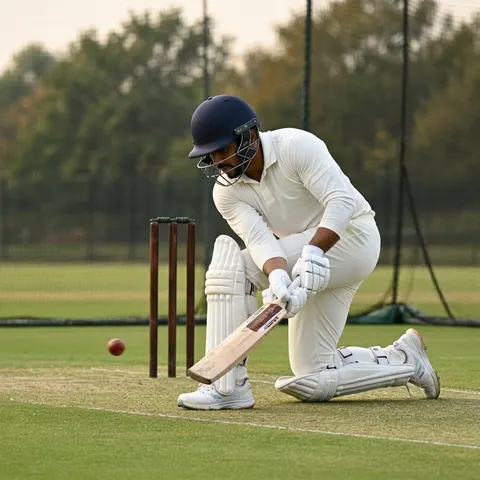
The paddle sweep is a fine, delicate sweep. The batter kneels, holds the bat at an angle and paddles the ball down toward fine leg using the ball's pace, without a big swing. It works when fine leg is up in the circle, because a single tap can beat the fielder.
Sachin Tendulkar used the paddle sweep often against spinners to rotate the strike and to disrupt a bowler's plan.
| Length | Full or good length |
| Line | On the stumps or the pads |
| Bowling | Mostly spin, sometimes medium pace |
| Footwork | Front foot, back knee down |
| Where it goes | Fine leg, behind the stumps |
| Famous for it | Sachin Tendulkar |
| Risk | Medium |
How to play the paddle sweep
- Check where fine leg is before you play it.
- Get down early with the front leg toward the line.
- Hold the bat at an angle, face toward fine leg.
- Let the ball meet the bat; paddle it with a short movement.
- Keep the head over the ball so it stays down.
Common mistake: Paddling a ball that bounces higher than expected. It takes the glove or the top of the bat and loops to the keeper or short fine leg.
21. Reverse sweep
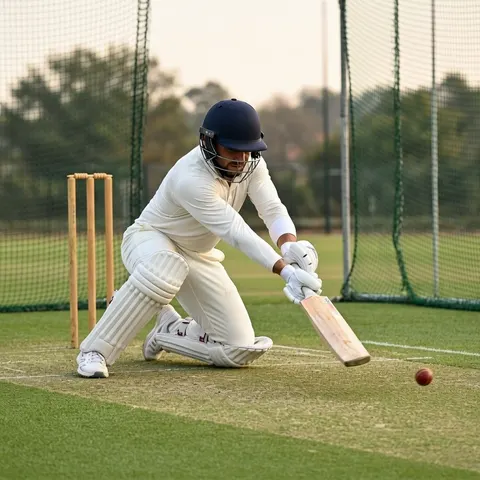
In a reverse sweep the batter keeps the normal stance but flips the bat as the ball arrives and sweeps it the opposite way, toward third man or point. It takes a spinner's field apart, because the off side behind square is usually empty.
It also has a famous failure: England captain Mike Gatting was caught off a reverse sweep in the 1987 World Cup final against Australia. Today Glenn Maxwell and Jos Buttler play it routinely, and Joe Root uses it to score against spin in Asia.
| Length | Full or good length |
| Line | On the stumps or outside off |
| Bowling | Spin |
| Footwork | Front foot, back knee down |
| Where it goes | Third man and point |
| Famous for it | Glenn Maxwell, Jos Buttler, Joe Root |
| Risk | High: top edge, LBW or bowled |
How to play the reverse sweep
- Decide as the bowler runs in, but do not change your stance before release.
- Get down onto the back knee with the front leg toward the ball.
- Turn the hands so the bat face points toward the off side.
- Sweep across the ball, hitting it in front of the pad.
- Keep the head still and roll the wrists to keep it down.
Common mistake: Reverse-sweeping a straight, quick ball. If you miss, it is often plumb LBW or bowled.
22. Switch hit
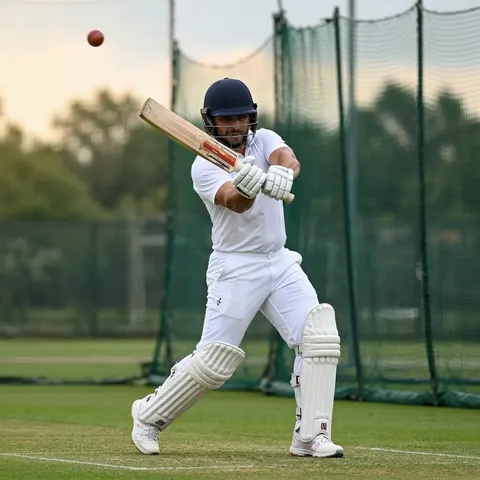
The switch hit goes a step further than the reverse sweep. As the bowler runs in, a right-hander changes both stance and grip to bat as a left-hander, then hits the ball hard over what was the off side. It is legal, and the MCC confirmed that in 2008.
Kevin Pietersen made it famous by switch-hitting New Zealand's Scott Styris for six in 2008. Glenn Maxwell plays it today, often against spin.
| Length | Full |
| Line | Around the stumps |
| Bowling | Spin, sometimes pace |
| Footwork | A full change of stance as the bowler runs in |
| Where it goes | Over the original off side, toward point or cover |
| Famous for it | Kevin Pietersen, Glenn Maxwell |
| Risk | High |
How to play the switch hit
- Practise batting with the opposite stance first, without a bowler.
- Start the switch after the bowler has committed to the delivery.
- Change feet and grip in one quick movement.
- Pick up the length and swing as a batter of the other hand.
- Try it only when you are well set in your innings.
Common mistake: Switching too early. The bowler sees it and changes the delivery, and you are left in an unfamiliar stance.
23. Scoop and ramp shot
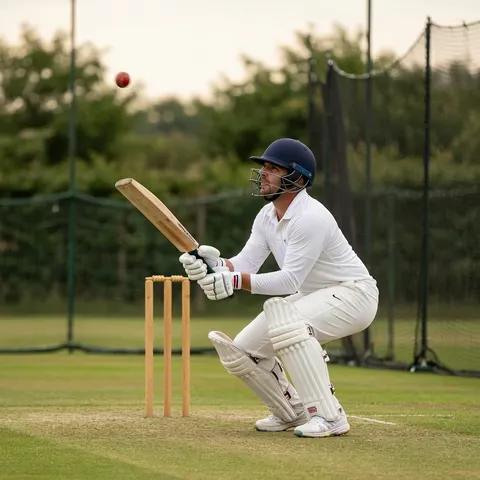
The scoop, or ramp, lifts a full, fast ball over the batter's own shoulder and over the wicketkeeper toward fine leg. The batter crouches, presents an open bat face and lets the bowler's pace do the rest. It is a death-overs shot, played when fine leg is in the circle.
Sri Lanka's Tillakaratne Dilshan made the straight version famous at the 2009 World T20, and it is still called the Dilscoop. AB de Villiers, Suryakumar Yadav and Rishabh Pant scoop and ramp all around the wicketkeeper.
| Length | Full, close to a yorker |
| Line | On the stumps |
| Bowling | Pace |
| Footwork | Down on bent knees, sometimes going down the pitch |
| Where it goes | Over the wicketkeeper, to fine leg or third man |
| Famous for it | Tillakaratne Dilshan, AB de Villiers, Suryakumar Yadav, Rishabh Pant |
| Risk | High: a mistimed scoop can hit the helmet |
How to play the scoop
- Practise it only with a helmet on and a soft ball first.
- Get low early, knees bent, head in line with the ball.
- Hold an open bat face pointing up, in front of the body.
- Let the ball hit the bat; lift it, do not swing.
- Keep watching the ball until it is past you.
Common mistake: Scooping a ball that is too short or bouncing. It comes up at the face, which is why the helmet is non-negotiable.
24. Helicopter shot
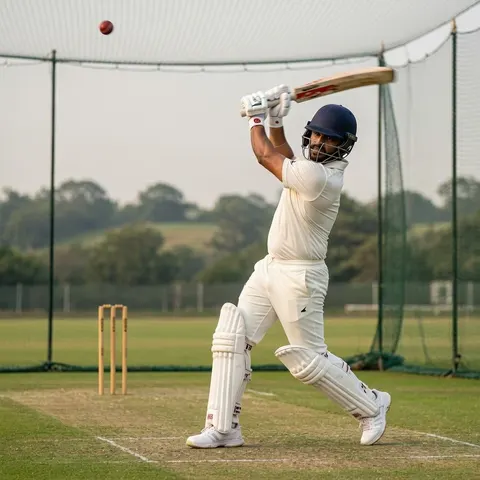
The helicopter shot turns a yorker, the hardest ball to hit, into a six. The batter gets the bat under a full ball at the base of the stumps with a powerful bottom-hand whip, and the bat swirls in a circle over the head after contact, sending the ball over long-on or mid-wicket.
MS Dhoni made it famous, and it became his signature in the death overs of white-ball cricket. It relies on very strong wrists and forearms, and it is one of the hardest shots to copy.
| Length | Yorker or low full toss |
| Line | At the base of the stumps or the toes |
| Bowling | Pace, at the death |
| Footwork | Small movement; a firm base |
| Where it goes | Long-on and deep mid-wicket |
| Famous for it | MS Dhoni |
| Risk | High: bowled if you miss |
How to play the helicopter shot
- Hold the bat with a strong bottom-hand grip.
- Keep a firm, still base, with the head over the ball.
- Get the bat down under the yorker as late as possible.
- Whip up through the ball with the bottom hand and wrists.
- Let the bat follow through in a circle over the head.
Common mistake: Trying it with weak wrists or a heavy bat. Without bat speed the ball just dribbles back to the bowler.
How to practise cricket shots at home
Most of these shots can be grooved without a net or a bowler. The aim at home is repetition of the shape: head position, footwork and a straight swing, so the shot is automatic when a real ball arrives.
- Shadow batting: play each shot slowly in front of a mirror, with no ball. Check that the head stays over the front knee on drives and that the bat comes down straight.
- Hanging ball: hang a ball in an old sock from a door frame or a ceiling hook at the height of a full delivery. It is ideal for the forward defence, the straight drive and the cover drive.
- Tennis-ball throwdowns: on a terrace or in a long corridor, have someone throw a tennis ball underarm at different lengths. Call the shot as soon as you read the length.
- Wall drills: hit a tennis ball against a wall with a straight bat to train soft hands for defence and timing for drives.
MetaShot's guide to practising batting at home has more drills that need very little equipment. Indoors, use a soft or tennis ball, clear the swing area of furniture, screens and fragile objects, and supervise children. Keep the pull, the hook and the scoop for proper nets, with a helmet.
When there is no one to throw, a smart cricket bat is another way to practise timing at home. With the MetaShot Smart Bat, the batter swings a real-bat-style controller at an in-game bowler on a phone, laptop or TV, and gets light and vibration feedback on each shot. It does not replace coaching or net sessions, but it makes a living-room session of drives and pulls something to look forward to. Read more in the guide to smart cricket and how to play it.

Frequently Asked Questions
How many types of shots are there in cricket?
There is no official number. Coaching manuals usually teach around a dozen orthodox shots: the defences, the four drives, the cut, the pull, the hook, the flick and the glance. Add the sweeps and the modern improvised shots and the count passes 20. This guide covers 24.
Which shot should a beginner learn first?
The forward defence, followed by the straight drive. Both use the same head position and straight bat, and almost every other shot builds on them.
What is the hardest shot in cricket?
The on drive is often called the hardest orthodox shot, because the front foot sits in the path of the swing. Among modern shots, the helicopter shot and the scoop are the hardest to play well, because they need very fast hands and precise timing.
What is the difference between a pull and a hook?
The height of the ball. A pull is played to a short ball arriving around waist or chest height and is usually kept down through mid-wicket. A hook is played to a bouncer at shoulder or head height and usually goes behind square leg, often in the air.
Is the switch hit legal?
Yes. The MCC, which writes the Laws of Cricket, ruled in 2008 that the switch hit is legal, after Kevin Pietersen played it in an international match against New Zealand.
What is a Dilscoop?
A Dilscoop is a scoop played straight over the wicketkeeper's head, named after Sri Lanka's Tillakaratne Dilshan, who made it famous at the 2009 World T20.
How do you hit a six in cricket?
Most sixes come from the lofted drive, the pull, the slog sweep and the helicopter shot. Pick a full or short ball, keep the head still, swing through the line with a full follow-through and rely on timing more than force.


